
My wife and I recently returned from a cruise in the Mediterranean where we saw the sites of Italy, Greece and Turkey. I had thought that Erdogan’s Islamization of Turkey would have made it a very repressive country, and that Attaturk’s vision of a secular Turkey was as dead and buried as he was. I also thought that Italy and Greece were mostly western countries in the mold of Western Europe. What I found was the opposite.
While I loved visiting Italy and Greece once again, the impression I received was one of vibrant Third World countries that didn’t use credit cards — I constantly had to change dollars into euros in Rome and Athens – and countries that would be more at home in Eastern Europe. However, the museums were fantastic — even though you don’t know when parts of them will closed at weird hours for lack of money. The ancient Roman and Greek sites made it feel as if Rome and Greece still ruled the world, but those days are definitely millennia passed.
I expected Turkey to be similar, and it was in regard to credit cards, but it was much stranger than Italy or Greece. Arriving in Istanbul, the first thing you notice are the mosques, hundreds of them adorning the cityscape. I felt as if I’d arrived in an alien world where the mosques almost seemed as if they were flying saucers that had temporarily landed.

One thing the government under the General Directorate of Foundations is trying to do is to reconvert museums and churches into mosques. There are no shortage of mosques, and according to the locals, one does not need a mosque to pray. Those that have been reconverted include the thirteenth century Haghia Sophia Church in Trabzon. As another example, after an earthquake in Istanbul in 1999, the sixth century Church of St. Sergius and Bacchus . The present Islamic government of Turkey has a choice to make. So far, they seem to be making the wrong one.
Once you acclimate yourself to the ever present mosques, you will notice how western the city of Istanbul really is. You feel you could be in Belgium, England or even the US. The people we met, especially the younger generation were decidedly modern and anti-Erdogan. They appreciated western values and didn’t want to give them up. Even one religious young man who was trying to find his place within Islam didn’t want to give up the freedoms his generation has sampled. While Erdogan may wish proudly to lead his people back to the seventh century, the modern generation is more than happy to remain in the twenty-first, and some of them are willing to fight for their freedoms. Attaturk may not be dead after all.
In many ways Istanbul is a modern city, it is a hub for international business and a modern cosmopolitan city. Even in the nineteenth century spice bazaar, you can get your Turkish Delight candy specially cut for you and then have the box shrink wrapped for freshness and to go easily through customs. But it is also pays attention to its traditional side in the care it takes to present its time-honored Mediterranean cooking. Its vegetarian tradition is beyond compare. In short, Turkey has the best of the old and the new. My wife and I liked it so much that we are thinking of going back in the spring. With the warmth of its people, its western and eastern flavors and its marvelous ancient archaeological sites, Turkey is a better than Disneyland because it’s all real. If its government can avoid wrecking it, Turkey will remain a wonder of the ancient and modern world.


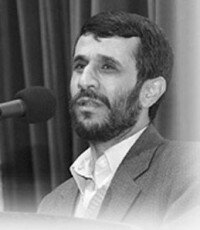 The Iranian President, Mahmoud Ahmadinejad, is a controversial and polarizing figure.
 The New York Film Festival hosted the first three hours of Oliver Stone’s self-described “revisionist history” of World War II through the present, soon to be shown on Showtime. Those three episodes of Stone’s “Untold History of the United States” concerned World War II and its immediate aftermath.