
Faster Than Light: Tactics and Strategies

Earlier this week I wrote about the game FTL: Faster Than Light. It is a surprisingly difficult game to master and complete, so I’m going to explore some basic tactics, strategies, and tips for playing FTL well.

I will be covering which enemy space craft systems you should target, how to get skill points, how to micromanage your units to stop boarders, when to repair your hull, and much more.

1. Priority in Attacking Enemy Space Craft Systems

Typically the first system on the enemy’s space craft you want to target is their shield generator. Once their shields are down, your non-shield piercing weapons can do damage to their hull. Typically you should target their weapons system after their shields. This will minimize and prevent the damage they can do to you. If you have only shield piercing weapons then you can often just take out their weapons system and not worry about the shields.

2. Abusing Automated Ships for Skill Upgrades

If you have an ion weapon like on the starting Engi ship, The Torus, you can set it to autofire on an automated space craft’s weapons systems. This will prevent the space craft from hurting you, while you shoot at it repeatedly with your ion weapon to build up your crew member’s weapons skill.

Sometimes enemy space crafts will only have ion weapons or something that can’t penetrate your full shields. You can sit there and keep absorbing the shots with your shield, earning your crew member shield skills.

3. Medical Bay Micro

It is easiest to defend your ship from boarders by gathering your crew and fighting in your medical bay while it is powered on so that it heals them.

Only a limited amount of people can be in a room at once. When your crew members that are fighting get to low health, switch them out of the fight room for a full health crew member. If you can access your medical bay, put the hurt crew member in there to heal, and when he gets his health back, switch him back into the fight, pull out the current fighter, and heal him up in the medical bay, rinse and repeat.

4. Pick Dialogue Paths That Suit Your Current Needs

Play through Faster Than Light for long enough and you’ll start to get a good feel for what will happen if you choose certain dialogue options for events. For example, if you are prompted to “look for survivors” at an event, usually the reward will be an extra crew member, while the punishment may be the loss of a crew member. If you’re in sector 7 and have three crew members that are all highly skilled, then the reward of getting a crew member will mean a lot less than the possible punishment of losing one of your crew members. On the other hand if you are in sector 1 and have just started the game, it is worth the risk to try and get that extra crew member.

5. Don’t Repair Your Hull Unnecessarily
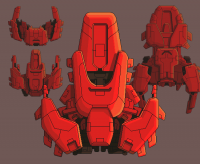
Don’t spend money now, that can be spent later. Saving up your scrap, instead of spending it needlessly on repairing minor hull damage, will give you more options. Just reached the store and see a good crew member, weapon, or augment you want but are short on cash? Not spending scrap on unnecessary hull repair or fuel could have given you that extra scrap needed to buy it.

Different stores charge different prices for repairing hull damage. Don’t spend four credits on repairing each point of hull damage if another store is only charging two credits to repair each point of hull damage.

6. Boarding Ships

Boarding ships and/or eliminating their crew members will typically earn you more scrap, fuel, missiles, and drone parts than if you simply destroyed their ship.

Before boarding take out their weapons system so your space craft doesn’t take any damage, and take out their medical bay so that they can’t camp in it and overpower you.

When boarding, teleport your crew to a two-man room so your crew doesn’t get surrounded and outnumbered.

7. Priority in Manning Space Craft Systems

The pilot system should be the first one manned. Without a pilot you have a 0% chance to evade enemy fire – unless you’ve invested in auto-pilot, which I wouldn’t really recommend.

The weapons system is next in line to be manned. If your weapons crew member is making you reload weapons 10% faster, then you will be doing 10% more damage to enemies.

Engines should be manned next. Manning the engines in the beginning will give your ship a 5% increased to evade enemy fire, which equates to taking 5% less damage.

Shields are the last in line to be manned. Though shields are very important, the benefit of manning the shields early on is small. In the beginning most ships start with one layer of shields that recharges quickly anyway. Later in the game manning the shields becomes much more important.

8. Venting Your Space Craft

Venting your space craft can be a good way to put out fires rather than pulling crew members off of manning systems. Venting your oxygen out of certain rooms can also be a good way to punish boarders, especially in combination with upgraded doors so that they can’t escape the room.

9. Pirates, Bribing, and You

Pirates who are willing to offer you a bribe to forget about them, often will make another bribe worth more resources if you beat it out of them.

If the pirate was chasing civilians, it is often worth it to destroy the pirate’s ship and then talk to the civilians for a reward. That way you may get double what you would have if you just accepted the bribe.

10. Investing in Your Space Craft

Two of the most important systems you can invest in are shields and engines. Shields are a rechargeable damage soaker that will prevent damage to your hull, while engines will increase your evasion rate significantly with each upgrade.

Failing to invest in weapons will also cause a problem. You may have no trouble finishing off enemies in a sector, but once you jump to a new one you may find that you can’t defeat anyone, nor get to a store to upgrade your weapons. Upgrade your weapons before you are forced to and you will save yourself and crew from an unnecessary demise.
Gaming on Linux is Far Overdue

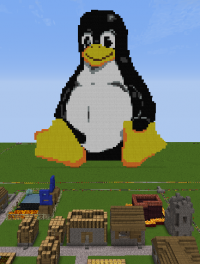
Somewhere along your computer career you have probably been introduced to a distribution of Linux. You probably tried a LiveCD, or even dual booted. The problem was that every time you wanted to play your favorite game, you had to reboot back into Windows. Eventually, you ended up just sticking with your Windows partition and leaving Linux behind.

The big question is: Why?

Why haven’t popular mainstream games like World of Warcraft, Battlefield 3, and Half-Life 2 been developed for Linux? What’s holding developers back from porting their games over to the Linux OS?

Many developers say the problem is that digital rights management does not play well with Linux. Digital rights management (DRM) is what developers include in their software to keep people from pirating it. There are many recent articles, including here and here, about how DRM is not the right direction we should be moving towards. People are going to pirate games anyway. They want to see their money go right to the programs, rather than big corporations (see: Humble Bundle).

Another reason going around for why games are not ported over is that there are so many different Linux distros that it would be too much to port to each distro. Well, this is true, but not every distro needs to be accounted for. Three of the top five used Linux distros are based on Debian.

It’s about time that mainstream games made their way onto the Linux OS. It will increase the user base of Linux greatly. For most people using Linux, the only thing keeping their Windows partition intact are the games.

For this reason, porting games to Linux could lower the Windows user base by a lot. Microsoft will be forced to provide a real benefit to justify paying for their operating system. And it’s not just the end-customer, OEM’s will start to think, “Hey, Linux is free, has a familiar look and feel, can run alternative open source applications, and can run games now. Oh, and now I can distribute computers way cheaper than I could with Windows.” Microsoft will be in trouble, especially when people stop paying for their precious Office suite and move over to LibreOffice or OpenOffice.org.

A company that has recently been talking seriously about working with Linux is Valve. Valve is known for developing games such as Portal, Counter-Strike, and the Half-Life series. Valve also created a client for buying and downloading games on your computer called Steam. Steam is one of the major distributors of PC games and also hosts a very large community for PC gamers.

Many games are released through Steam, so just moving Steam and the 2,500 games available could be a driving force to make gaming on Linux more mainstream. Valve did it for Mac, and it worked with great success. They ported over the Half-Life 2 engine games, and that was enough to get a decent user base.

The Steam for Linux closed beta has just started. The reason for the Steam for Linux beta could be attributed to Gabe Newell, the founder of Valve, calling Windows 8 “a catastrophe”, and stating that he is jumping ship to Linux.

“The big problem that is holding back Linux is games. People don’t realize how critical games are in driving consumer purchasing behavior. We want to make it as easy as possible for the 2,500 games on Steam to run on Linux as well. It’s a hedging strategy. I think Windows 8 is a catastrophe for everyone in the PC space. I think we’ll lose some of the top-tier PC/OEMs, who will exit the market. I think margins will be destroyed for a bunch of people. If that’s true, then it will be good to have alternatives to hedge against that eventuality.” – Gabe Newell (founder of Valve)

If Steam were to move to Linux, the first thing I would do is format my Windows hard drive to make room for more episodes of The Walking Dead. Now if only Netflix would switch over to Linux…

Note: There are ways to run some games on Linux, but their compatibility is limited. Wine does a decent job, and PlayOnLinux tweaks Wine a little better. Running games inside of a virtual machine is kind of moot. But we shouldn’t have to rig games to work in our operating system.

Posted in Gaming, Technology | Tagged Battlefield 3, Counter-Strike, Debian, digital rights management, dual boot, Gabe Newell, gaming, Half-Life, Half-Life 2, Humble Bundle, LibreOffice, , LiveCD, , , OEM, OpenOffice.org, operating systems, partition, , PlayOnLinux, Portal, Steam, Steam for Linux beta, The Walking Dead, Valve, , virtual machine, , Windows 8, Wine, World of Warcraft | 1 Reply

Faster Than Light

FTL: Faster Than LightFTL: Faster Than Light is a spaceflight simulator game by Subset Games that has consumed my life for the past few days.

The object of the game is to control a space craft that you must navigate safely across eight sectors of space before the Rebel fleet can hunt you down. Traveling through outer space, you will come across asteroid fields, space pirates, trading outposts, slave traders, alien species, dangerous planets, and more. Along the way you can upgrade your space craft and get new parts to make it more formidable. You can raid other ships, help distressed civilians, or just kill everything that comes across your path.

At first glance Faster Than Light looks like a Star Trek video game straight out of the 90′s. The chill music and pixelated graphics of FTL reminded me of VVVVVV, another old school style indie game found in the Humble Indie Bundle. Underneath the simplistic graphics though is a complex and detailed game.

FTL: Faster Than Light screenshot

Faster Than Light combines tactical, turn-based space combat with the role-playing elements of decision making, character management, and item management. Each of FTL’s different unlockable space crafts that you start with lends itself to different playstyles. For example, The Kestler, the default ship, is a weapons heavy, nimble space craft that is piloted by Humans, while the Torus is an Engi ship that makes heavy use of lasers and offensive drones.

Faster Than Light is a hardcore game. Death is permanent, choices have consequences, and the universe is hostile. Very hostile. You can’t even save your game to go back in time before you made a bad decision. The grueling difficulty of the game on normal mode will scare off casual gamers in favor of those who can stay up all night tediously micromanaging all aspects of their space craft. As of this writing I’ve played the game around forty times on normal and have gotten to the last sector around five times, yet I haven’t beaten the game once yet.

Faster Than Light is a great game, but it requires a specific type of gamer to enjoy it. Those who grew up playing roguelikes and other old school games may have a special appreciation for FTL. It is unforgiving, cold, and cruel – like outer space – but the multitude of play styles, unlockable space crafts, and tough difficulty will satisfy hardcore gamers. The overall length of the game is not long, but it is hard to complete, especially with achievements, which will keep any completionist going.

Pros

  • Hard difficulty and tons of micromanagement will keep hardcore gamers busy
  • Tons of weapons and accessories to customize your space craft
  • Combines the best parts of tactical turn-based role-playing games and space combat sims
  • Achievements and unlockables that keep the game fresh
  • Graphics and music are good and give the game a unique look and feel

Cons

  • Limited amount of unique encounters means you will see the same dialogue often across different playthroughs
  • Short length, especially on easy mode

If you have ten dollars, a free weekend, and want to play a tough scifi, role-playing game with an old school nostalgia feel, then Faster Than Light is the game for you!

Ski Safari

I was shown the game Ski Safari the other day by my friend Levi. Although it was only for a few minutes, I devoured the game and didn’t want to give it up. Seeing that it was only a dollar to buy for the iPhone (iOS), I wasted no time in getting it for myself.

Ski Safari is a game that combines the speed of with the free riding of Line Rider. Using various skis or mounts, you propel your character at blistering velocity down the game’s generated mountain slopes to avoid a continuously falling avalanche. Rocks, boulders, frozen ponds, cabins, and launch ramps litter the path forcing you to navigate around them, or sometimes to just crash right through them. Landing backflips and pulling off tricks like riding on clouds, earns you score multipliers and speed boosts. You can also collect coins along the way to spend on rewards like new outfits, snowmobiles, and rocket boosters.

The two man team behind Ski Safari, Brendan Watts and Shawn Eustace from Defiant Development, have managed to create a product that is as addictive as it is fun. Between achievements, ranks, online leaderboards, and unlockable items, Ski Safari keeps giving you another reason to keep playing just one more time.

Ski Safari’s gameplay is slick, its controls feel responsive, and it is a blast to play. I would have liked to see more complexity in the level designs though. There are three levels available in the game with another one currently under construction. Each level has a unique feature and unique mount – frozen ponds and wolves in Howling Hills, for example. But instead of forcing different tactics or styles of gameplay, each level plays similarly, no matter which one you choose.

One of the few downsides of the game is the annoying soundtrack and sound effects. I turned them off immediately upon playing the game. On the iPhone it’s not an issue though, because you can easily play your own music instead.

My high score at the time of this writing is 2,034,489 on Eagle Bluffs. What’s yours?

Pros

  • A fun and high speed, side-scroller with responsive controls
  • Fresh, smooth graphics and animation, good color scheme
  • Leaderboards, achievements, and unlockables incentivizes you to keep playing

Cons

  • Gameplay can be simple, would have been better if Ski Safari allowed for more tactics and strategy
  • Annoying music and sound effects (can be turned off)

I am usually averse to giving numbered scores on reviews, however for the sake of the reader, I will. I would rate Ski Safari 8.75 out of 10, especially considering that it is only one dollar at the time of this writing. If you are looking for a quick, portable, and cheap lunch break sized game for iOS or Android, then Ski Safari might be right for you.

Posted in Gaming, Review | Tagged Android, Defiant Development, iOS, Line Rider, Ski Safari, Sonic The Hedgehog, | 3 Replies