Turkey: The Country not the Bird

My wife and I recently returned from a cruise in the Mediterranean where we saw the sites of Italy, Greece and Turkey. I had thought that Erdogan’s Islamization of Turkey would have made it a very repressive country, and that Attaturk’s vision of a secular Turkey was as dead and buried as he was. I also thought that Italy and Greece were mostly western countries in the mold of Western Europe. What I found was the opposite.

While I loved visiting Italy and Greece once again, the impression I received was one of vibrant Third World countries that didn’t use credit cards — I constantly had to change dollars into euros in Rome and Athens – and countries that would be more at home in Eastern Europe. However, the museums were fantastic — even though you don’t know when parts of them will closed at weird hours for lack of money. The ancient Roman and Greek sites made it feel as if Rome and Greece still ruled the world, but those days are definitely millennia passed.

I expected Turkey to be similar, and it was in regard to credit cards, but it was much stranger than Italy or Greece. Arriving in Istanbul, the first thing you notice are the mosques, hundreds of them adorning the cityscape. I felt as if I’d arrived in an alien world where the mosques almost seemed as if they were flying saucers that had temporarily landed.

Istanbul, Turkey

One thing the government under the General Directorate of Foundations is trying to do is to reconvert museums and churches into mosques. There are no shortage of mosques, and according to the locals, one does not need a mosque to pray. Those that have been reconverted include the thirteenth century Haghia Sophia Church in Trabzon. As another example, after an earthquake in Istanbul in 1999, the sixth century Church of St. Sergius and Bacchus . The present Islamic government of Turkey has a choice to make. So far, they seem to be making the wrong one.

Once you acclimate yourself to the ever present mosques, you will notice how western the city of Istanbul really is. You feel you could be in Belgium, England or even the US. The people we met, especially the younger generation were decidedly modern and anti-Erdogan. They appreciated western values and didn’t want to give them up. Even one religious young man who was trying to find his place within Islam didn’t want to give up the freedoms his generation has sampled. While Erdogan may wish proudly to lead his people back to the seventh century, the modern generation is more than happy to remain in the twenty-first, and some of them are willing to fight for their freedoms. Attaturk may not be dead after all.

In many ways Istanbul is a modern city, it is a hub for international business and a modern cosmopolitan city. Even in the nineteenth century spice bazaar, you can get your Turkish Delight candy specially cut for you and then have the box shrink wrapped for freshness and to go easily through customs. But it is also pays attention to its traditional side in the care it takes to present its time-honored Mediterranean cooking. Its vegetarian tradition is beyond compare. In short, Turkey has the best of the old and the new. My wife and I liked it so much that we are thinking of going back in the spring. With the warmth of its people, its western and eastern flavors and its marvelous ancient archaeological sites, Turkey is a better than Disneyland because it’s all real. If its government can avoid wrecking it, Turkey will remain a wonder of the ancient and modern world.

The Power of Transformation: My Day in the Movies

TransformationUsing Craigslist, my wife and I volunteered to be extras on a movie filming in the New York City area. We submitted a photo and our measurements. We both expected to play tourists visiting a restored nineteenth century village that uses costumed re-enactors. While she did portray a tourist, my fate was different.

We arrived on set at about 11:30 am and signed in with a bubbly young woman who was coordinating the extras. She told us she would try to have us in and out expeditiously. Of course, we waited and waited. We had been told there would be air conditioning, but as the outside temperature approached 100, all we had was two medium-sized electric fans for at least one hundred extras. We therefore decided to go out on the terrace, where the temperature felt at least ten degrees cooler. I had an inkling that something was about to change, when the extra wrangler approached us and told us to come inside and sit near her. She then told me I looked like “The Mayor.”

The wardrobe mistress fetched me and took me to a room where I had two choices of nineteenth-century-style wool jackets whose sleeves were a little long on me, one top hat that mysteriously fit perfectly, and a black cravat. She then sent me back to the hot-box holding room.

A half hour later she came for me again, gave me my clothes, and told me to put them on. A half hour after that, the make-up woman did my face. I was now officially “The Mayor,” clad in three layers of clothing, trying to adjust to the heat. Then I was on call for what turned out to be the next five hours.

Putting on the costume metamorphosed my shy self into an outgoing, talkative personality. When I looked in the mirror, I appeared a little like Abraham Lincoln. The staff started calling me “Mr. Mayor.”  Other extras asked me to pose for pictures with them. One star-struck guy wanted to know what other movies I had been in. A little girl kept giving tea and lemonade to “The Mayor.” Another extra who had brought his own outfit looked like Stan Laurel of the Laurel and Hardy comedy team of the first half of the twentieth century. He was a voice impersonator with a spot-on Bullwinkle and Yoda, and said he had been in more than 100 movies. The SAG-AFTRA actors, normally aloof from the non-union extras, treated me like one of them, sharing their stories with me. One sweet looking young woman had been an international karate champion and had qualified for the Olympics.

Finally, at about 6 pm, those in period costumes took a van to the outdoor area where filming was taking place. Everybody seemed to know my character, including the co-director and her assistants. I was “The Mayor.” I had my picture taken by an official set photographer and by an assistant director. My actual part was fairly small. I was to wave, tip my hat, and greet visitors entering and leaving the park. While I assumed we were filming a comedy, I actually have no idea if my assumption was accurate. When the two stars passed by me, one of them started exaggeratedly bowing to me, which I returned in kind. Through the five takes, it became a game between us.

As we were returning to holding, all the extras, including my wife, were told they could go, except for those dressed in period costumes. The staff at holding hadn’t gotten the message, however, and some told us we could leave as well. I had to inform them we were asked to wait. Finally around 8 pm as the sun was starting to set, all of us, including my wife who had to stay because of me, were summoned back to the set for the last scene to be shot at the park.  My job was similar to the first scene, except I was to thank people for visiting. Because of the lack of time almost no one was able to exit and I would be surprised if I were in frame in the scene.

In most movies the stars are off limits to the extras. You’re not supposed to talk with them or have any contact with them, including eye contact. This time was different. The two stars, who are household names, graciously allowed their pictures to be taken with some of the extras. As “The Mayor,” I was allowed to cut in line to do so with one of them.

I didn’t want to give back my costume, as it had somehow made me other than I was. I had been magically transmuted into a different person and energized. All in all, it was a pleasure for this usually skeptical observer of life, who is now smitten with the acting bug. In this one area, my wife is now more skeptical than I am about looking for more jobs as extras.

Ten Ways To Tell if You’re an Anti-Semite (with apologies to David Letterman)

10. You’re careful to specify that you’re not an anti-Semite, only anti-Zionist.

9. Your definition of a non-violent protest is one in which the Palestinians only throw rocks and Molotov cocktails.

8. You think Israel is a racist state because it’s mainly for Jews, but you don’t think the 52 Islamic states are racist because they’re mainly for Muslims.

7. You think BDS (Boycotts, Divestment and Sanctions) just wants Israel to go back to its 1967 borders (that are in reality the 1949 Armistice lines).

6. You believe that the Mavi Marmara, one of the six ships sent from Turkey to break the Israeli blockade of Hamas-run Gaza, was just carrying aid to the Palestinians.

5. You believe that suicide bombing against Israeli civilians is okay, but you’re horrified at the Boston bombing.

4. You believe that Palestinians can do what they want to Israelis, but any counter measures by the Israelis are automatically war crimes.

3. You’re willing to speak out and volunteer for the Palestinian cause, but you wouldn’t do so for the Tibetan, Cypriote, Kurdish or other causes.

2. You feel that because you’re against many of the things the West does, including capitalism and intervention in Third World countries, that you automatically have to be against Israel, the invention of the West.

1. After reading the above nine reasons, you still think you’re only anti-Zionist.

Model Christy Turlington Burns Says Childbirth Deaths Are Avoidable

Christy Turlington BurnsShe’s on the cover of the June/July 2013 issue of Harper’s Bazaar. She’s one of Fast Company’s most creative people of 2013. And she’s determined to stop women from dying in childbirth.

Every day, roughly one thousand women die from the complications of pregnancy or childbirth, yet most of these deaths are preventable. That’s the message of model and activist Christy Turlington Burns’ documentary “No Woman, No Cry.”

The first-time filmmaker’s own experience with post-partum hemorrhaging after the birth of her daughter, Grace, and a 2005 visit to El Salvador, her mother’s homeland, inspired Turlington Burns to document maternal mortality worldwide.

“It’s a global tragedy,” she said at a screening of the film in New York City, so she decided to tell the stories of women in four different countries.

Turlington Burns first takes us to Tanzania, where a very pregnant Janet must walk five miles to reach a small clinic. She has no food with her, and the clinic provides none. Because her labor has not progressed enough, the health care worker sends her home. When Janet returns to the clinic, she’s so weak that she’s told she must now get to a hospital, a one-hour drive away. The van to take her costs $30, more than one month’s income for Janet’s family. Turlington Burns provides the money, and Janet gives birth to a healthy boy.

Tanzania lacks adequate health care facilities and medical personnel, as do most developing nations, with only one obstetrician for every 2.5 million people. With more and better facilities, women like Janet don’t need to die, as she surely would have if the film crew had not been there.

In Bangladesh, the issues are different. Health care facilities are often close by, yet most women will not use them because of the social stigma attached: it’s considered shameful to give birth outside the home. With proper education, however, attitudes can change. When a health care worker counsels Monica, who is ashamed to seek medical help, she finally agrees to have her baby in a hospital, leading to a happy outcome – the birth of a son.

In Guatemala, Turlington Burns encounters yet another issue. Abortion is illegal, even in cases of rape and incest. So when a young woman becomes pregnant as a result of rape, her illegal abortion almost kills her; it takes nearly six weeks of hospitalization for her to recover. Changing religiously based norms is probably the toughest challenge regarding maternal health, but it can happen, Turlington Burns argues.

Although 99 percent of childbirth-related deaths occur in the developing world, the United States has vast room for improvement, ranking 50th in maternal mortality. Women of color are especially vulnerable, as are those who have no health insurance.

“Being uninsured and pregnant is a disaster,” said Jennie Joseph, a Florida midwife featured in the film.

Ironically, the only woman who dies of childbirth-related complications in the documentary is an American woman who succumbs to an amniotic fluid aneurism. Turlington Burns shows the toll her death takes on her family with sensitivity and compassion.

Two years in the making, “” can be purchased on iTunes and Amazon.

The State Of Alcohol: Vermont

Vermont is a great state for beer enthusiasts. Despite tons of competition, Vermont has the most breweries per capita of any state in America, with one brewery per 26,073 people. Vermont’s wide selection of microbreweries, pubs, taverns, and homebrews are sure to satisfy any hop head.

The following are some of my favorite local brews, arranged in no particular order:

Switchback

One local brewery is , which is based out of Burlington, Vermont. Switchback makes the Switchback line of beer, which was traditionally only sold by the keg or on tap. However, on October 22, 2012 the Switchback line was expanded to include can sales.


Switchback’s pale ale is usually my choice for keg beer. It has a malty taste, that you can drink all night and be satisfied. Switchback’s local charm and higher quality is always more than worth it compared to the macrobrew competition.

Heady Topper

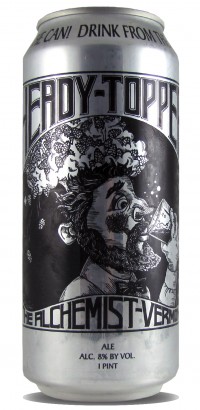
The Alchemist is based out of Waterbury, Vermont and specializes in producing one great beer, Heady Topper.

Heady Topper is my favorite beer at the moment. BeerAdvocate rates Heady Topper 100 / 100, and I have to agree that it is definitely a world-class beer. Heady Topper smells and tastes of citrus, and conceals its 8% alcohol content well. According to The Alchemist, one should drink it straight from the can rather than pouring it into a glass.

Heady Topper has proven to be hard to find, as it tends to sell out as soon as it is stocked in stores. The best way to get this gem is straight from the factory on Mondays and Thursdays. I’ve noticed Finnigan’s Pub in Burlington, Vermont usually has them available as well.

Woodchuck

Vermont Hard Cider, maker of the Woodchuck brand cider, is based out of Middlebury, Vermont. Vermont Hard Cider has plans to be bought out by Ireland’s C&C Group for $305 million.

I’ve always found Woodchuck to be a solid, mainstream cider. It seems to be popular among the college crowd, and among casual drinkers. It’s high sugar content makes the first two go down easy, while drinking more than that tends to upset my stomache with its sweeteners. These days I tend to prefer other local, more natural tasting ciders.

Magic Hat

A growler from Magic Hat is pictured on the right.

Magic Hat is based out of Burlington, Vermont and is well known for producing #9, an apricot tasting pale ale.

I used to live down the road from Magic Hat, they have a great deal where you can buy a growler of beer from the brewery, and you can keep getting it refilled for a discounted price.

In addition to their regular lineup, Magic Hat also produces seasonal beers which can vary in quality. Generally they tend to be medium class beers. If you want to try a lot of Magic Hat, I recommend getting their variety pack.

Long Trail

Long Trail Brewing Company is a microbrewery based out of Bridgewater, Vermont and was founded in 1989. Long Trail is known for its environmentally conscious operation and brewing practices.

Long Trail is similar to Magic Hat in that they both produce very solid, middle-class beers with mild fruit flavors. I tend to prefer Long Trail over Magic Hat, but not everyone will agree with that assessment.

Rock Art

Rock Art Brewery is a microbrewery based out of Morrisville, Vermont. They tend to produce medium to high quality concoctions. The beer typically comes in a six pack or bomber but apparently you can get it on tap as well.

A lot of Rock Art’s beers strikes me as thin and floral tasting, especially the barley wine ale, Ridge Runner, that I’m drinking at the moment. Usually I’ll drink Rock Art if I’m looking to mix it up and get something interesting and unusual.

Vermont Pub And Brewery

Vermont Pub And Brewery is located in Burlington, Vermont. They brew a variety of high quality ales, stouts, porters, and more on site. The pub and brewery was founded by legendary brewer Greg Noonan, author of the indispensable . Greg Noonan died recently in 2009.

I actually had my first legal beer at Vermont Pub And Brewery when I turned twenty one. I haven’t been there in a while, but I remember being impressed with the quality and variety. Vermont Pub And Brewery also has an excellent selection of pub food even if you’re not looking for a brew.

Trout River

Trout River Brewing Company is based out of of Lyndonville, Vermont.

They offer solid beers that I find myself picking up occasionally when I get tired of the usual selection. Trout River also allows you to refill your growlers for a discounted price. If you live near Lyndonville, this works out to be a great deal.

Fiddlehead

Fiddlehead Brewing Company is a microbrewery based out of Shelburne, Vermont. Fiddlehead is available on tap across Vermont, and in growlers if picked up from the factory.

I actually haven’t had Fiddlehead in a long time, but from what I remember it is a solid IPA worth seeking out if you are visiting Vermont.

Otter Creek

Otter Creek Brewing is based out of Middlebury, Vermont.

Otter Creek is another beer I haven’t had in a while. Typically, it is something I get when I’m trying to mix it up and go for another local brew.

Conclusion

Heady Topper is the best beer you will find in Vermont. In fact, it may be the best beer you can find in America. It is definitely my beer of choice for canned beer.

Switchback is also my choice of beer when I go to the bars and get something on tap.

Although, Heady Topper and Switchback are two of my favorites, there is room for disagreement. What are your favorite Vermont beers and ciders?

Posted in Culture, Review | Tagged #9, alcohol, ale, barley wine ale, beer, BeerAdvocate, bomber, Bridgewater, Burlington, cider, Fiddlehead, Fiddlehead Brewing Company, Greg Noonan, growler, Heady Topper, IPA, Long Trail, Long Trail Brewing Company, Lyndonville, Magic Hat, microbreweries, Middlebury, Morrisville, New Brewing Lager Beer: The Most Comprehensive Book for Home and Microbrewers, Otter Creek, Otter Creek Brewing, Pabst Blue Ribbon, pale ale, porter, Ridge Runner, Rock Art, Rock Art Brewery, Shelburne, stout, Switchback, Switchback Brewing Company, The Alchemist, The Alchemist Pub and Brewery, Trout River, Trout River Brewing Company, Vermont, Vermont Hard Cider, Vermont Pub And Brewery, Woodchuck | Leave a reply

The Insane Quotes of Mahmoud Ahmadinejad

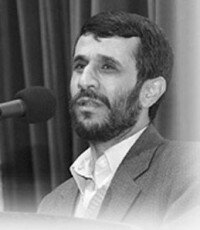
The Iranian President, Mahmoud Ahmadinejad, is a controversial and polarizing figure.

His wide ranging statements include Holocaust denial, insinuations that Israel should be destroyed, declaring that the United States has never won a war, and saying that there are no homosexuals in Iran.

There is some debate whether Ahmadinejad has seriously called for Israel to be destroyed, or whether he meant that Israel’s form of government should end. The truth is he has called for both – for Israel to be destroyed, and its government to be ended.

Below is a list of statements made my Mahmoud Ahmadinejad categorized by Holocaust denial, statements on Israel, statements on the United States, and statements on technology and culture.

Holocaust Denial

“They have invented a myth that Jews were massacred and place this above God, religions and the prophets. The West has given more significance to the myth of the genocide of the Jews, even more significant than God, religion, and the prophets, (it) deals very severely with those who deny this myth but does not do anything to those who deny God, religion, and the prophet. If you have burned the Jews, why don’t you give a piece of Europe, the United States, Canada or Alaska to Israel? Our question is, if you have committed this huge crime, why should the innocent nation of Palestine pay for this crime?” SourceJewish Virtual Library (December 2005)

Of course, some governments and their people always hated the Jews because of the ugly conduct of some of them. They wanted to drive the Jews out of Europe. But anti-Semitism was planned mainly by some European governments and politicians, and by the Zionist network. They made hundreds of films, wrote hundreds of books, spread rumors, and conducted psychological warfare, in order to drive them away, to the land of Palestine. Four or five years after World War II, they suddenly claimed that during that war, the Holocaust affair had taken place. In other words, according to their claims, several million Jews were burned in the crematoria. They created two slogans. The first was about the injustice suffered by the Jewish people. By means of lies, very twisted propaganda, and psychological warfare, they created the notion that the Jews suffered injustice, and, secondly, that they needed a land and an independent state. They acted so effectively that some of the world’s politicians and intellectuals were also deceived and influenced.”
Source: MEMRITV (September 18, 2009)

“If the Holocaust that you talk about was real, why don’t you allow the subject to be studied? One can freely research any issue, except for this issue, which is sealed. It is a black box, which they do not allow to be opened or reexamined. They do this in order to exploit it.”
Source: MEMRITV (September 18, 2009)

On Israel

“Anybody who recognizes Israel will burn in the fire of the Islamic nation’s fury.”
Source: CNN (October 27, 2005)

There is no doubt that the new wave in Palestine will soon wipe off this disgraceful blot from the face of the Islamic world.”
Source: Al Jazeera (October 26, 2005)

“Today too, the most important issue in the world is Palestine. If a war breaks out in Iraq, we believe it is due to the provocation of the Zionists. If it happens in Afghanistan, it is because of their provocation. If Sudan is oppressed, it is due to Zionist seduction. We consider all the arrogant, colonialist schemes to be inspired by the Zionists.”
Source: MEMRITV (September 18, 2009)

“The world powers established this filthy bacteria, the Zionist regime, which is lashing out at the nations in the region like a wild beast.”
Source: Jerusalem Post (February 20, 2008)

“Death to Israel! Death to Israel!”
Source:

“I want to tell them (western countries) just as the Soviet Union was wiped out and today does not exist, so will the Zionist regime soon be wiped out.”
Source: Democracy Now! (December 13, 2006)

“The establishment of the Zionist regime was a move by the world oppressor against the Islamic world.”
Source: Worldpress (October 30, 2005)

“Our dear Imam said that the occupying regime [Israel] must be wiped off the map and this was a very wise statement… I have no doubt that the new wave that has started in Palestine, and we witness it in the Islamic world too, will eliminate this disgraceful stain from the Islamic world.”
Source:

“Confronting this regime and opposing Zionists are a national duty, as well as religious and Islamic duty, and a human duty. Even the people of Europe and America despise the Zionists. They hate them. They feel humiliated by the Zionists, who are a burden on them.”
Source: MEMRITV (September 18, 2009)

“I believe that with the complete formation of the global Zionist network, they have seized control of the fate of the European governments, and of the US government. To the independent countries in the world, I would like to say: You should know that the influence of the Zionist network on your culture, your politics, and your economy is tantamount to a violation of your independence. They cling like ticks. The moment they gain influence, they never stop.”
Source: MEMRITV (September 18, 2009)

On the United States

“The United States has never entered a serious war, and has never been victorious.”
Source: The Atlantic (September 21, 2010)

Is it possible for us to witness a world without America and Zionism? You should know that this slogan, this goal, can certainly be achieved.”
Source: New York Post (September 23, 2007)

Technology and Culture

“We will convert the entire world to Islam with our logic. We are confident that the Islamic logic, culture, and discourse can prove their superiority in all fields over all schools of thought and theories.”
Source:

“In Iran we don’t have homosexuals like in your country. […] In Iran we do not have this phenomenon. I don’t know who’s told you that we have this.”
Source:

“Is there art that is more beautiful, more divine, and more eternal that the art of martyrdom?  A nation with martyrdom knows no captivity. Those who wish to undermine this principle undermines the foundations of our independence and national security . . . The message of the (Islamic) Revolution is global, and is not restricted to a specific place or time . . . Allah willing, Islam will conquer what?  It will conquer all the mountain tops of the world.”
Source: